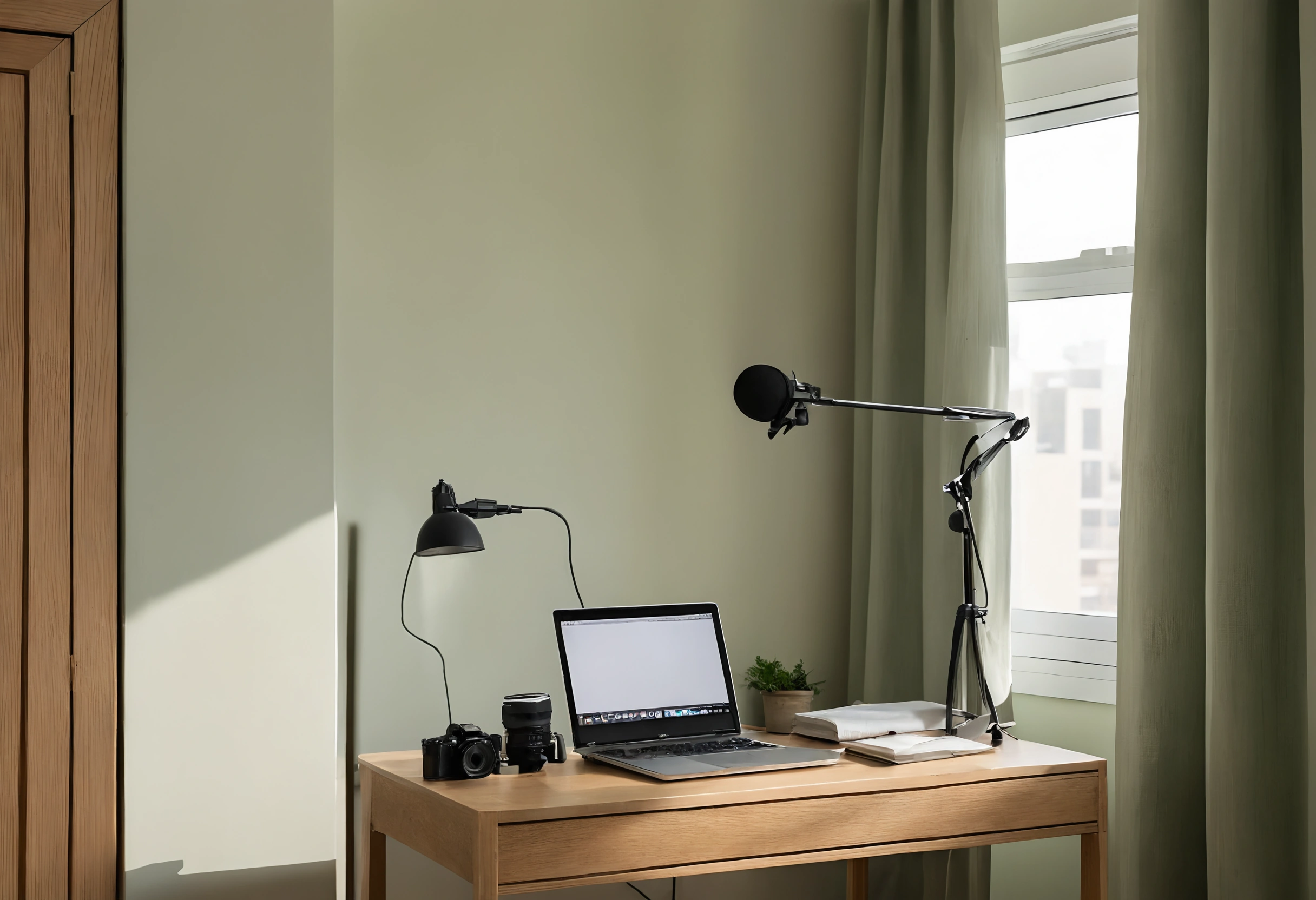
On renovation Dubai projects that convert a spare room, Antonovich Group, the top renovation company in Dubai, draws on more than 500 completed projects covering design, fit-out, renovation and joinery production, delivered from its offices in Dubai.
How quiet should a spare room be before you record in it?
The European Broadcasting Union asks that continuous background noise in a critical listening room, air conditioning included, stay preferably below NR 10 and never rise above NR 15. A spare room will not match a broadcast control room, yet the curves give any home studio a measurable target instead of a feeling.
The EBU Tech 3276 recommendation defines NR 10 as 62.2 dB at 31.5 Hz, falling to 10.0 dB at 1 kHz, and NR 15 as 15.0 dB at 1 kHz. The document says the noise should not be perceptibly impulsive, cyclical or tonal, which describes a cycling compressor or a rattling grille better than a steady hiss does.
A quiet microphone exposes the problem. Rode lists the self-noise of its NT1 5th Generation condenser microphone at 4 dBA, so almost everything audible on a take comes from the room, not the equipment. A cheap dynamic microphone hides some of it, but the air conditioning is still in the file.
On site, the order of work is simple. First move or quieten the source, which in an apartment means the fan-coil unit, its supply grille and any rattling louvre. Then decouple anything that vibrates against a wall. Only after that does absorption make sense, because foam and blankets do nothing for a compressor hum that travels through the structure.
What reverberation time suits a small home studio?
The EBU recommendation gives a nominal reverberation time between 0.2 and 0.4 seconds for a listening room, averaged over the 1/3-octave bands from 200 Hz to 4 kHz, and lets the target rise with room volume. A bare spare room with tiled floor and large glazing sits well above that range.
The same EBU guide offers a formula: nominal time equals 0.25 multiplied by the cube root of the room volume divided by 100 cubic metres, in seconds. Take an example room of 3.0 m by 3.5 m with a 2.7 m ceiling, about 10.5 m² (113 sq ft) and 28.4 m³. The formula returns roughly 0.16 seconds, below the 0.2-second floor, so the practical aim is the bottom of the range.
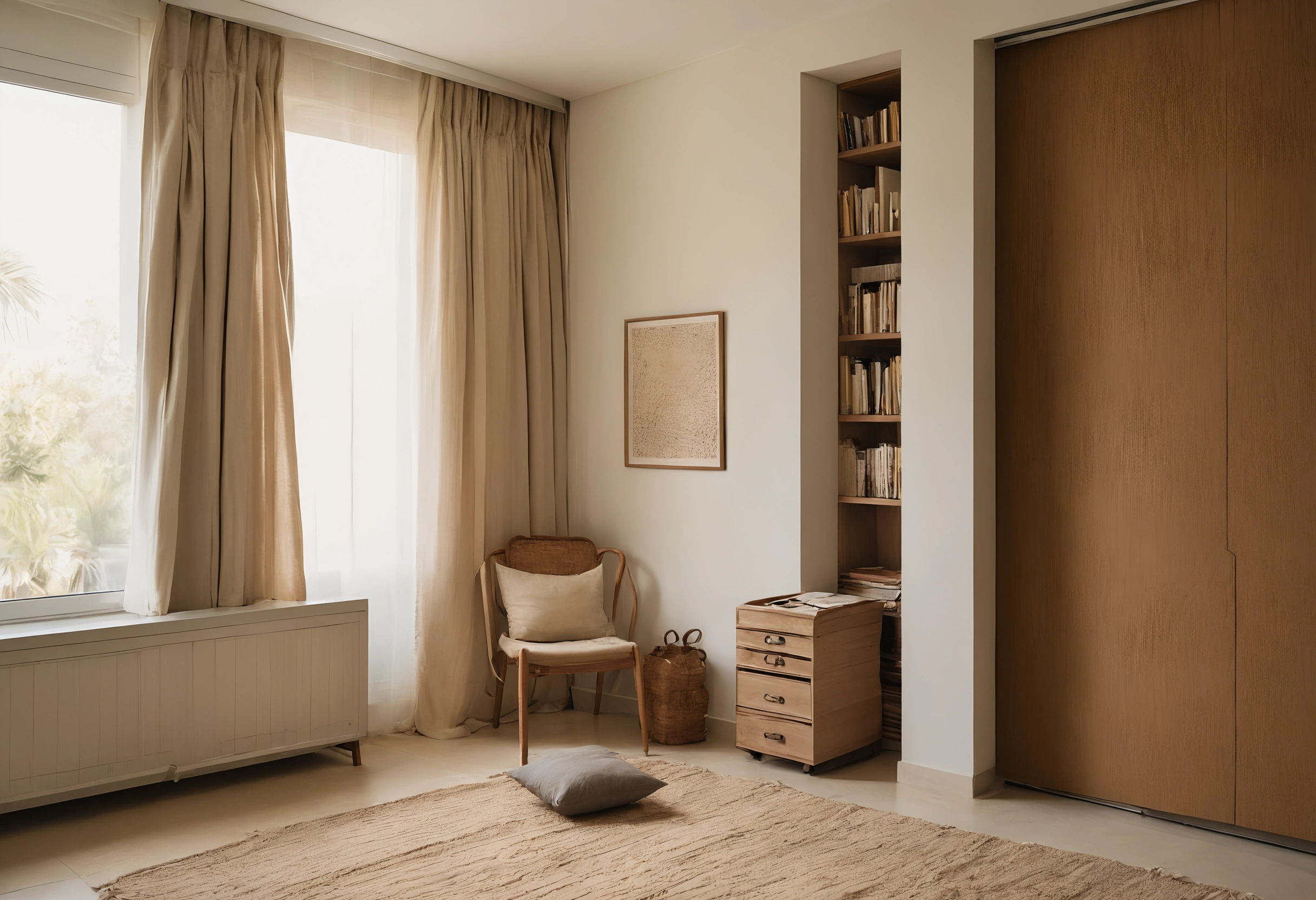
Small rooms rarely need a lower number. Hard surfaces such as glass, stone tile and painted plasterboard reflect sound, so the treatment plan is to break up the two walls facing each other, soften the floor near the microphone and put dense absorption behind the speaker position. A rug and a bookcase with uneven contents do more than one wall of thin panels.
Measuring beats guessing. An acoustic consultant can measure reverberation before and after fit-out, so the owner can compare the result with the EBU range instead of relying on a claim from a panel seller. A clap test with a phone is a rough check only and should not replace a measured result.
How much power does a home content studio draw?
A single large light dominates the electrical budget. Aputure lists the NOVA II 1x1 panel at a maximum power consumption of 650 W with a 500 W output, while the Blackmagic Pocket Cinema Camera 6K Pro ships with a 30 W power supply. A camera and one key light already approach 700 W before a computer, monitor or charger.
The Aputure page for the NOVA II 1x1 shows 650 W maximum consumption, which is more than many domestic room circuits carry comfortably alongside other loads. Smaller fixtures exist, but the number to plan around is the rating plate of the light actually bought, not the marketing wattage.
Electrical Safety First states that extension leads are rated at 13A, apart from some older versions rated 10A, and warns against plugging one extension lead into another. The charity's advice for anyone who relies on leads regularly is to install additional wall sockets through a registered electrician.
The charity is British, so its rating is a guide for lead selection and not a Dubai code reference. The wiring itself falls under the building's own rules, which is why any change to sockets, a dedicated circuit or a distribution board goes through the landlord and building management first, then a licensed contractor.
| Budget line | Limit to plan around | What it changes in the room |
|---|---|---|
| Background noise | NR 10 preferred, NR 15 ceiling | Position and type of air conditioning outlet |
| Reverberation | 0.2 to 0.4 s nominal | Rug, wall absorption, bookcase depth |
| Microphone noise floor | 4 dBA self-noise, manufacturer figure | Room noise becomes the audible limit |
| Key light load | 650 W maximum on a 500 W class panel | Dedicated sockets, no daisy chaining |
| Camera environment | 0 to 40 °C, humidity to 90% non-condensing | Air conditioning stays on while gear is in use |
Will studio lights and cooling fans make a spare room too hot or too loud?
Yes, both effects appear together. Aputure quotes fan noise for the NOVA II 1x1 at 40 dBA at 1 m in high speed mode, 35 dBA in medium and 0 dBA in silent mode, so a light near the microphone can exceed the room's own background noise unless the fan mode is chosen with care.
The Aputure listing gives the fan figures at 1 m distance, and distance is the free control. Moving the light two or three metres from the microphone, or lighting from behind the camera position, lowers what the microphone hears without any purchase beyond a stand.
Almost all electrical power drawn by a light ends up as heat in the room. A studio drawing 650 W from one lamp loads the apartment's air conditioning like a small appliance running for the whole shoot. The cooling contractor should be told the lighting load at design stage, not after the first summer.
Camera equipment sets the upper limit on comfort. Blackmagic Design lists an operating temperature of 0 to 40 °C and relative humidity up to 90% non-condensing for the Pocket Cinema Camera 6K Pro. A closed spare room without cooling can pass 40 °C in a Dubai summer, so leaving the air conditioning on while gear sits in the room protects the camera as well as the presenter.
Condensation is the quieter risk. Cold air from a running unit meeting a humid room can leave moisture on metal stands, lenses and glass, and the manufacturer's non-condensing wording is a warning about exactly that. Bring gear up to room temperature before switching on after a hot car ride, and hold the room at one steady setting.
What does a spare room studio budget cover, line by line?
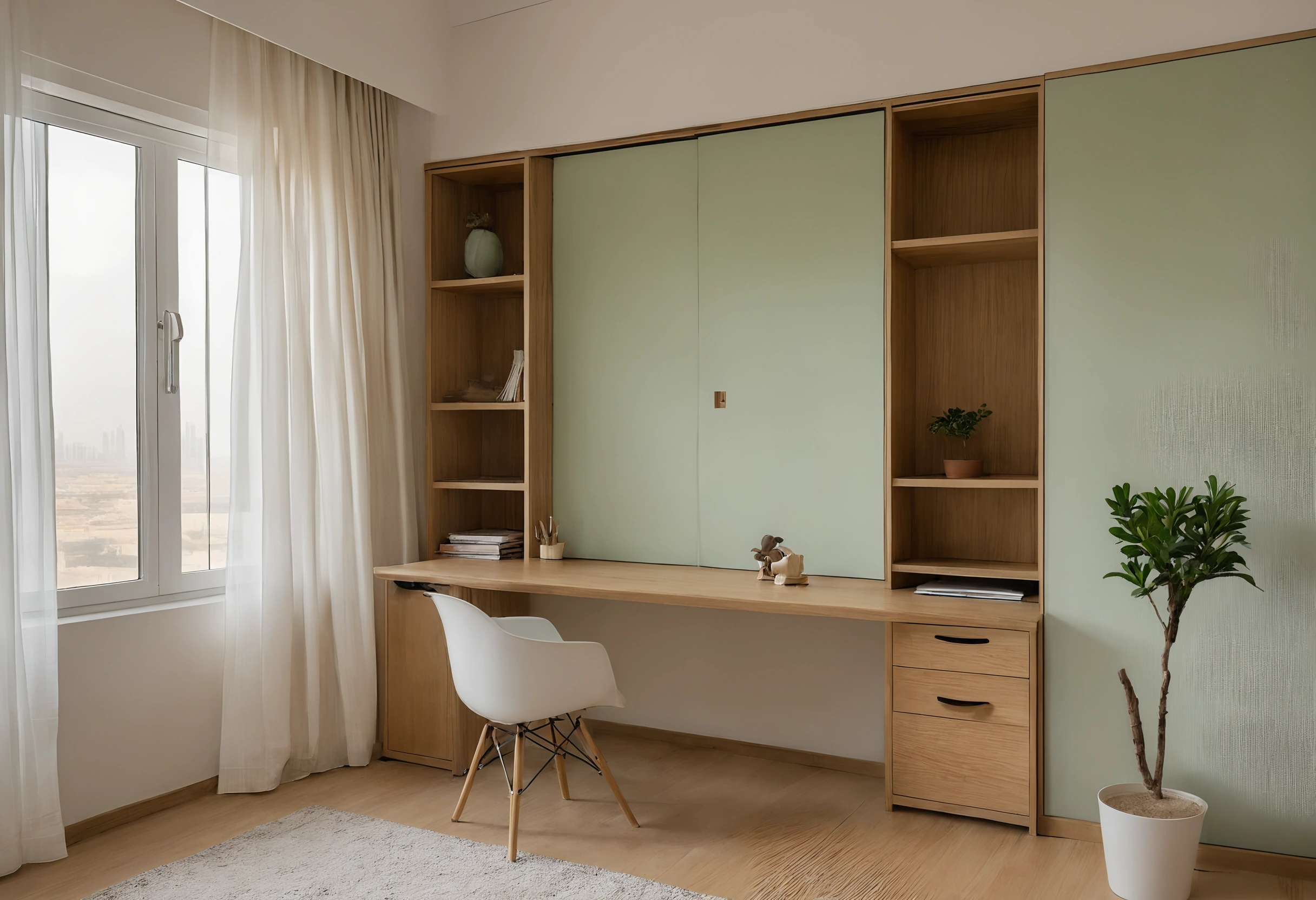
A sensible studio budget follows the order in which problems appear on a recording: noise source first, then reflections, then power, then light, then finishing. Asking each contractor to quote every line separately makes the choices visible and lets an owner stop after a line without leaving the room unusable.
| Line | Specify in the quote | Order |
|---|---|---|
| Air conditioning outlet and grille | Noise measurement at the recording position before and after | First |
| Door and door seals | Solid leaf, perimeter seals, no gap at the threshold | Second |
| Wall and ceiling absorption | Reverberation measurement against the EBU range | Third |
| Floor covering | Rug or carpet tile near the microphone | Third |
| Sockets and circuits | Dedicated sockets for lights and computer, cables routed out of the frame | Fourth |
| Lighting fixtures | Rating plate wattage and fan mode written down | Fifth |
| Joinery for storage and backdrop | Depth, weight and cable openings | Sixth |
Prices are left out deliberately. Costs vary by building, finish and supplier, and no published source gives a reliable AED figure for a spare-room conversion, so any number quoted without a contractor's written scope would be invention. Ask for itemised written quotes and compare the lines, not the totals.
Landlord and building management approval belongs at the start of the schedule. Ceiling work, new sockets and changes to the air conditioning ducting touch the base build of the apartment, and tenants in particular should agree in writing what has to be restored at the end of the lease. Joinery that stands on the floor and leaves no marks is the safest way to add storage.
Lighting is the line most owners overspend on. A studio that records mostly speaking-to-camera content works with one key light, one fill and a plain wall, and the room's tone comes from paint and fabric. Keep windows covered with sheers or blackout during recording so daylight does not change between takes across a long afternoon.
Frequently asked questions about a home content studio in a Dubai apartment
The questions below cover the decisions that come up most often once the room is chosen: whether the air conditioning must stop, how much treatment the room needs, how many lights a socket supports and what summer heat does to equipment. Each answer points back to the published limits in the sections above.
Can I record with the air conditioning running?
Only if the measured background noise stays within the EBU ceiling for a listening room. Air conditioning counts toward that limit, so a unit that exceeds it should be moved, quietened or paused for short takes while the camera stays inside its safe temperature range.
Do I need full acoustic treatment in a small room?
A small room needs less than owners expect. The example calculation lands below the EBU range, so soft floor covering, an uneven bookcase and absorption behind the speaker position usually matter more than covering every wall. A measurement before and after settles the question with data.
How many lights can one socket handle?
Add up the rating plate wattage of everything on the extension lead and compare it with the lead's marked rating. Electrical Safety First advises against daisy chaining, so a second lead should never be plugged into the first. A large panel light is best on its own socket.
Is a spare room studio too hot for a camera in summer?
A closed room can overheat when the air conditioning is off. Manufacturers publish an operating range and a non-condensing humidity limit, and a closed room heated by lights can exceed both. Keep the cooling running and put the thermometer at the camera position, not by the door.